„Woman has the right to mount the scaffold; she must equally have the right to mount the rostrum”

What does feminism mean for a woman?
By Hanna Borowska and Girls Future Ready Foundation, 2025
For me, it is primarily the fight for gender equality - equal rights and opportunities in every sphere of life. It’s the right to make decisions about myself, my body, and my life choices, without limitations or pressure from society. It’s about the responsibility to combat discrimination and violence against women. Feminism gives me strength and helps me discover my worth, as well as build solidarity with other women, because together we can achieve more and fight better for our rights.
The above quote is a famous speech made by Olympe de Gouges, the French abolitionist and independent thinker who uttered these words during her preface to the 1791 “Declaration of the Rights of Woman and the Female Citizen” . This Declaration was created as a manifesto for women’s right to equal participation with men in social and political life. In it, the courageous Frenchwoman described women as “a sex superior in beauty and courage.” In seventeen articles, she addressed a nation that is nothing more than a collection of Women and Men, and emphasized the fact that women are born free and remain equal to men in all rights. It can be argued that de Gouges initiated what would later be referred to as the first wave of feminism.
For initiating the movement advocating for gender equality in political and social rights, Olympe de Gouges was charged with treason and sentenced to death. In 1793, she was executed by guillotine. Unfortunately, one of the slogans of the French Revolution - égalité - remained a utopia for women.
In reality, the formulations of the 1789 “Declaration of the Rights of Man” could also be applied to the private lives of women, who were unquestionably denied civil and political rights. Nevertheless, women began to fight more for all fundamental rights. In 1792, the Englishwoman Mary Wollstonecraft, one of the leading figures in political and social debate in England in the late 18th century who had a huge influence on shaping feminist ideology in the early 20th century, published “A Vindication of the Rights of Woman”, in which, in addition to demanding political equality for women and men, she focused on improving and changing the education system for women. “Hyena in a petticoat” (as she was called) staunchly defended the position that women only appeared to be intellectually inferior to men simply because they lacked access to education. She described marriages based on women’s inferiority to men as “legalized prostitution.” She carried out her work with the next generation in mind, hoping to leave behind a more just world for them.
Mary Wollstonecraft always emphasized that all citizens, regardless of their origin, wealth, or other factors, are equal before the law and criticized all stereotypes and roles of women in the family. These ideas were later adopted by the second wave of feminism, which fought to demand real equality between women and men. Attention was drawn to the problem of male dominance in the family and women’s rejection of professional development in favor of being the goddess of the hearth. This movement is beautifully depicted in the 2003 film “Mona Lisa Smile”, in which teacher Katherine Watson (played by Julia Roberts) tries to challenge and dismantle stereotypes by trying to believe in them. She teaches her best-in-the-nation students that an engagement ring on a girl’s hand is worth no more than her own choice - college education.
The third wave of feminism, also known as postfeminism, is somewhat back to the beginning. Third wave activists have noted that the goals and assumptions of feminism have already been achieved, but women of different cultures, ethnic identities, religions, and races, other than white, were omitted in their actions. The class and racial issues taken up by feminists in the late 20th century highlighted the diversity present in multiethnic, multireligious, and multicultural societies. The emphasis was placed on listening to the voices of previously overlooked women and fighting for equality on a global scale. The education of young girls was seen as crucial so that they could be free, happy, proud of their femininity, and not afraid to pursue their goals. Activists began to look for solutions that would allow women to harmoniously fulfill the role of mother while balancing professional careers -maternity leave, fair pay, flexible working hours. Feminism became firmly entrenched in academic, political, cultural, and economic life.
Today, we are living in the episode of the fourth wave of feminism, initiated by Hillary Clinton. Unfortunately, it is difficult to characterize its exact demands, as it is still in the developmental stage. Under the slogan “women’s rights are human rights,” feminists around the world are uniting to fight against local patriarchal practices and campaigning for reform of international law. At the same time, thanks to the work of human rights activists, and new cosmopolitan institutions, such as the International Criminal Court, have emerged that can punish violations of human dignity in various countries. The globalization of demands has been achieved.
Feminist views are visible everywhere. Year by year, women are proving that there are no insurmountable obstacles for them to overcome. They express themselves in every field, address important topics, and fight for themselves. Above all, they highlight a shared initiative. Thanks to the #MeToo movement, initiated by journalists at The New York Times, has begun discussions about workplace harassment have begun. Jodi Kantorand Megan Twoheyhelped expose sexual predators in Hollywood. In 2018, Nadia Murad received the Nobel Peace Prize for her efforts to end the use of sexual violence as a tool of war and armed conflict. She was herself a victim of sexual violence and slavery at the hands of ISIS fighters. Kathryn Bigelowbecame the first woman to win an Oscar for Best Director for the film “The Hurt Locker” in 2010. Singer Taylor Swift is the first person in the music industry to earn a billion dollars solely from her work. During the 2024 Olympic Games, women won 8 out of 10 medals for Poland. Have you heard that the first European to walk the entire Great Wall of China was Serbian performer Marina Abramović?
There are many more successes like these. Some are found in old books, while others have been achieved over the years. A huge number are still being created. We activate women who aspire to develop their talents. Despite all these achievements, unfortunately, many challenges still lie ahead. Sexual assault, gender bias in public areas, lack of confidence, hostility, discrimination, and struggles with acceptance are just a few examples. Today, the main battle for feminists is the fight for the self-awareness of young girls. Will they dare to fulfill their dreams? Will they be able to overcome all the problems? Will they be determined, stubborn, and strong enough? Will they even recognize that they are worthy of their dreams? Will they have enough confidence to express themselves?
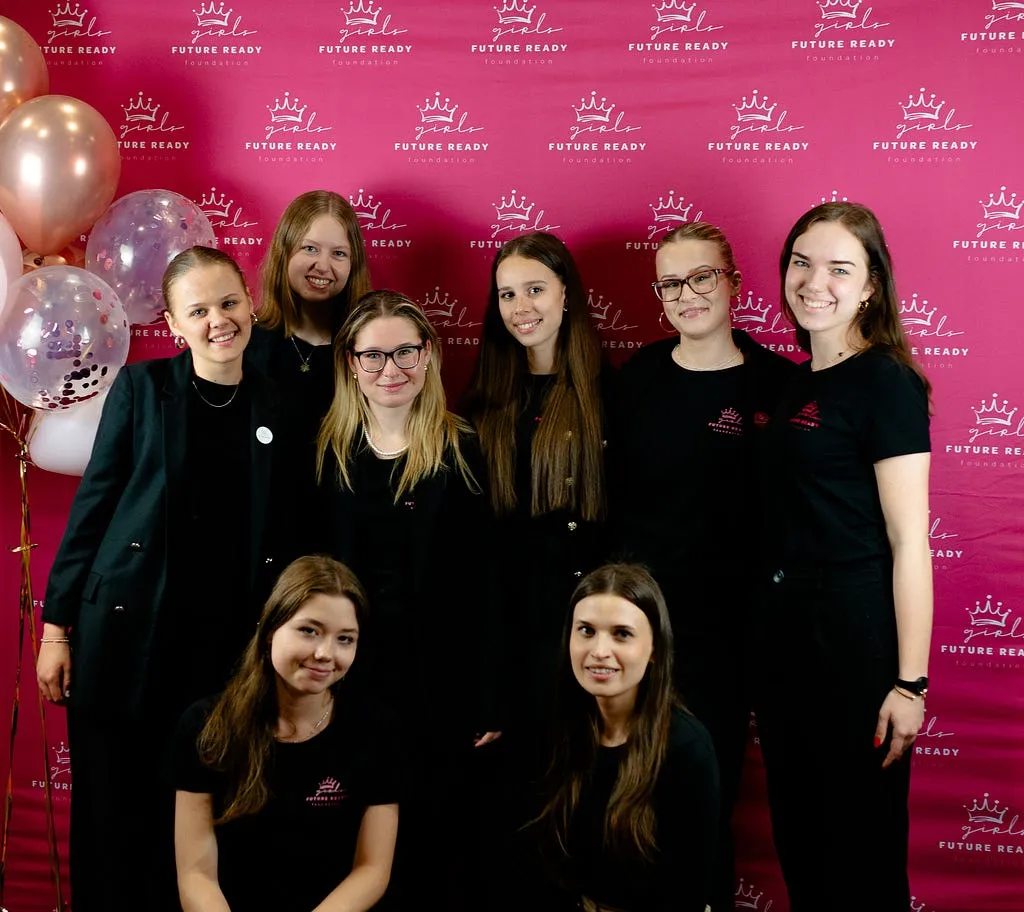
The mission ahead of us is to ensure that every answer to the questions posed above is affirmative. That’s why foundations like Girls Future Readyexist. To remind us that A GIRL WITH A VOICE IS A GIRL WITH A FUTURE!
Coco Chanel once said: “The most courageous act is still to think for yourself. Aloud.”
And so, I come to you with a proposal. Let’s think together about what has already happened and what still lies ahead.
First published on Medium