STEREOTYPE
„I don’t know you, but I know who you are.”
Or at least that’s what I think. Because once, I saw something on television, read about it in a book, and then heard someone confirm that information. In some aspects, such „ready-made” notions take shape at a young age and do not change as we mature. The prejudices that arise make me a person with low openness to experience, low agreeableness, and high zeal.
This process was described by Hieronim Stroynowski as follows:
„These false perceptions, opinions, customs, and institutions erase the inherent equality among people, extinguish their innate feelings of mutual kindness, respect, and compassion, and obscure the principles of natural justice and benevolence.”
The Greek term „stereos typos”, meaning „fixed impression,” originally belonged to the field of printing, referring to a plate-matrix used for repeated reproduction. It is, therefore, a concept rooted in visual culture, though it is also closely related to categories such as literary type or archetype. It was not until 1922 that Walter Lippmann used this term to describe a simplified cognitive schema. His definition of the stereotyping mechanism states:
„It is usually not the case that we first see and then define, but rather that we first define in order to see.”
But what does this actually mean? What are the consequences of thinking in terms of stereotypes? The answers to these questions may be more serious than they seem.
DISCRIMINATION
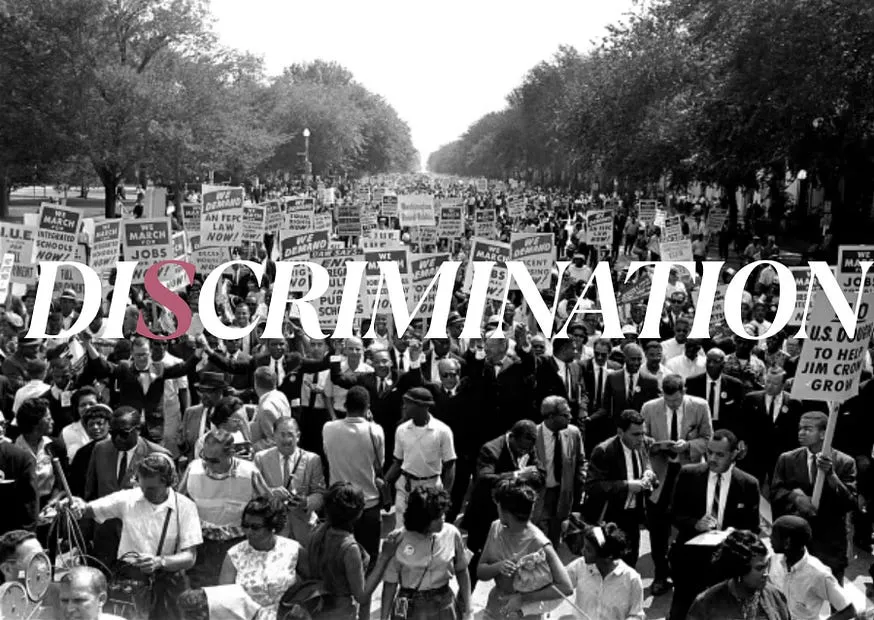
This led to the exclusion of African American citizens from American society in the 1950s. Despite formal equality, people were segregated at work, in schools, and even on public transport. This issue was particularly visible in the southern states, where segregation was solidified by numerous legal regulations known as Jim Crow laws. For example, there were restaurants where African Americans were not served, as well as public transport and waiting rooms where they were only allowed to occupy a designated section. Public places even had special drinking fountains designated for them. Due to an unsubstantiated belief, society was divided into races of “colored” and “white.” This system was known as Apartheid. In 1968, the United Nations recognized this ideology as a crime against humanity.
SIMPLETON
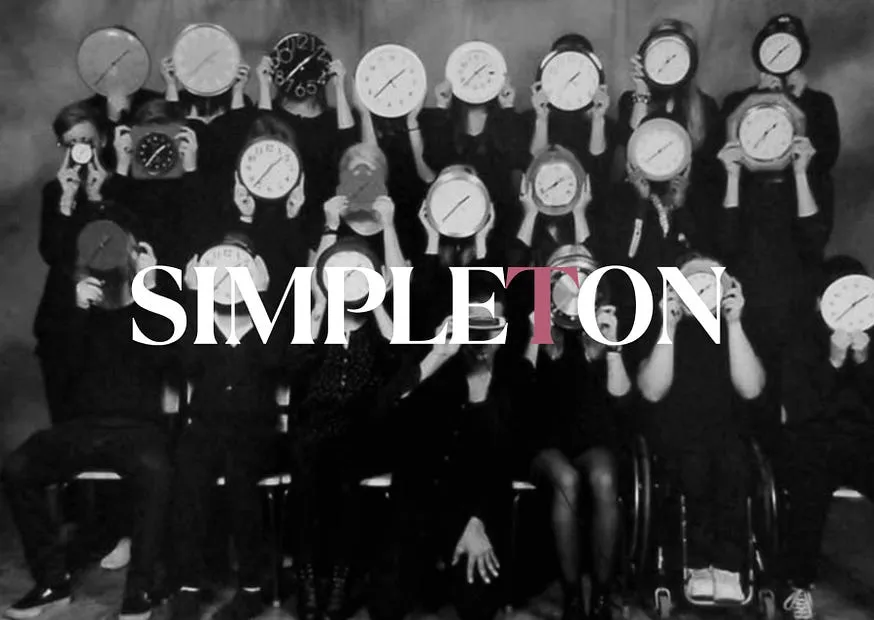
This refers to focusing on just one characteristic feature of the observed object, leading to the neglect or failure to recognize other aspects of it. It is a categorical schema of people or groups that has general characteristics: oversimplification, saturation with judgement, reliance on prejudices, standardization – an inherent belief in the uniformity of all members of a particular group, based on incomplete knowledge, automatism, exaggeration, and cultural transmission.
COMPLEX

They arise as a result of strong emotions that occurred in the past. This means that they are most often the result of unpleasant situations, such as negative comments about one’s appearance or behavior. The transmitter of the idea of beauty – not attractiveness – is the media, which daily spread stereotypes about the ideal look. This is becoming a serious problem, already affecting 11-year-old girls and staying with them into adulthood.
According to the Dove report „On the Perception of Beauty and Girls’ Self-Esteem,” every second girl between the ages of 10 and 17 feels pressure to be beautiful, and this concern consumes her more than the pressure related to schoolwork.
In Poland, 47% of girls believe that in order to succeed in life, they must look a certain way, and 57% think that meeting certain beauty standards is crucial today.
However, achieving unrealistic standards is impossible. But young girls don’t know this. They unconsciously compare themselves to idealized images, mistaking them for reality. In such a competition, one cannot win. One can either stop fighting or focus on their so-called „imperfections.” Renee Engeln, in her book „Beauty Sick: How the Cultural Obsession with Appearance Hurts Girls and Women,” states that the obsession with beauty is painful. “It keeps us from being who we want to be and living the way we want to live. Instead of facing the world, we stare into the mirror.”
This focus on being beautiful (which should not be confused with vanity), constantly encouraged by culture, leads to a lack of self-confidence, objectifies women in the public sphere, and even stifles their intellectual potential. In extreme cases, it can lead to mental health disorders. And yet, we all know that beauty is subjective – it’s that “spark in the eye.” Until we eliminate stereotypes from the public sphere, every woman will face a moment in life when she must decide: fight, or accept and love herself?
ROUTINE
But how can we get rid of stereotypes if they help us understand the world? Regardless of whether they result in the right narrative. Can you imagine discovering everything again? It is obvious that it is better, or perhaps simpler, to adjust one’s beliefs to the rest. There is even a term that describes this phenomenon. It’s called heuristics. From the Greek „heuriskein,” meaning „I find.” It is the ability to detect new facts and establish connections between them, especially by using hypotheses. Based on existing knowledge, theories are created that do not need to be proven.
FEAR
Or maybe we’re just afraid of novelty? What if we are disappointed, or perhaps make a mistake? After all, as humans, we love to feel in control. Constantly questioning things would be overwhelming. For some, it is also a threat because too much attention could disrupt their cultural and social identity. The question is, though, whether this change in thinking is needed for the existence of a balanced, just world, based on the common good? But that’s too many smart words. Besides, from a psychological perspective, the fear of the unfamiliar has roots in evolution. In prehistoric times, the unknown could have been a threat, making us instinctively fearful of those outside our group. Is it still the same now? Does changing the way we think require too much courage?
CATEGORIZATION
When a person adopts a stereotype, they often categorize people into „us” vs. „them.” They begin to see “their own” as individuals, each different in their own way, while seeing members of other groups as homogeneous, assigning them identical traits. By thinking this way, they deprive themselves of the chance to get to know “the others.” If we looked at this from another perspective, it could be the main cause of wars in the world. Svetlana Alexievich talks about this in her book War Doesn’t Have a Woman’s Face. Not only does she describe how easily hatred towards another human being can be instilled, but she also points out that during World War II, this seemed to be commonplace. Our comrades didn’t rape us because they knew it was an immoral act, one that attacked the most important value – dignity. However, without boasting about their actions, at night they harmed those who were “foreign.” Did they feel any differently? No. But according to the accepted model, they were a mass. If only we could change perspectives. Not „us” vs. „them,” but simply „humans.” Perhaps we could avoid the violence and harm we inflict on each other generation after generation. Dr. Wiola Rębecka, a psychologist working with victims of wartime rapes worldwide, reminds us: „Let’s not forget, a wound heals in about 10 days. Bruises disappear even faster. But the scars on the soul left by rape remain for a lifetime.” The International Criminal Tribunal for the former Yugoslavia (ICTY) has recognized rape as a crime against humanity.
UNCERTAINTY

According to a 2017 study, the profession of a programmer is seen as “typically male” by 59% of respondents. I think this percentage would be much higher if the question referred to „rather male.” Men are seen as individuals whose left hemisphere of the brain, responsible for logical thinking, dominates. According to these beliefs, women are characterized by a dominant right hemisphere responsible for creativity. In reality, the brain and its hemispheres are not as binary as stereotypes suggest. Although the brains of men and women do indeed differ in structure and functioning, gender does not affect the dominance of either hemisphere. Additionally, it turns out that good communication between both hemispheres is necessary to solve complex problems effectively. Researchers have repeatedly tried to identify the predispositions of men and women to mathematics, and the results have been conflicting. Among mathematically gifted children and students, boys dominate. However, in older groups, women achieved better results. This discrepancy fades when the studied groups come from environments where gender equality is important. All of this indicates a strong social factor influencing the interest in mathematics among girls and boys. If we convince someone from birth that they lack the predisposition for something, how can we be surprised that so few girls choose technical professions? Fortunately, year by year, this is changing. Women are finding the confidence to step out of the patterns that were imposed on them long ago. There is a real truth that says that any statement can be changed, you just have to want to.
INJURY
“Killing a child, you help not only them but also yourself. The child, because, with albinism, there’s no point in living – they won’t achieve anything and have many problems. When passing on the street, people won’t have to spit over their left shoulder to protect their family from albinism. They won’t hunt them either when the shaman says that bringing him a left hand of a person with albinism will guarantee happiness, for example, in love. And you help yourself survive twice: people won’t talk about something being wrong with the family, and since the shaman already talked about happiness, it’s better to keep it all to yourself.” Anita Werner and Michał Kołodziejczyk perfectly describe in their book Hope FC. Football, People, Politics what it means to harm, thinking to avoid unpleasantness. It is estimated that in recent years, there have been at least 300 murders of albinos in more than 20 African countries, and 10,000 people with a lack of melanin in their skin had to relocate due to fear for their lives. Due to a stereotype, you cannot live, because your hand, just like all others, has “magical power.”
PREJUDICE
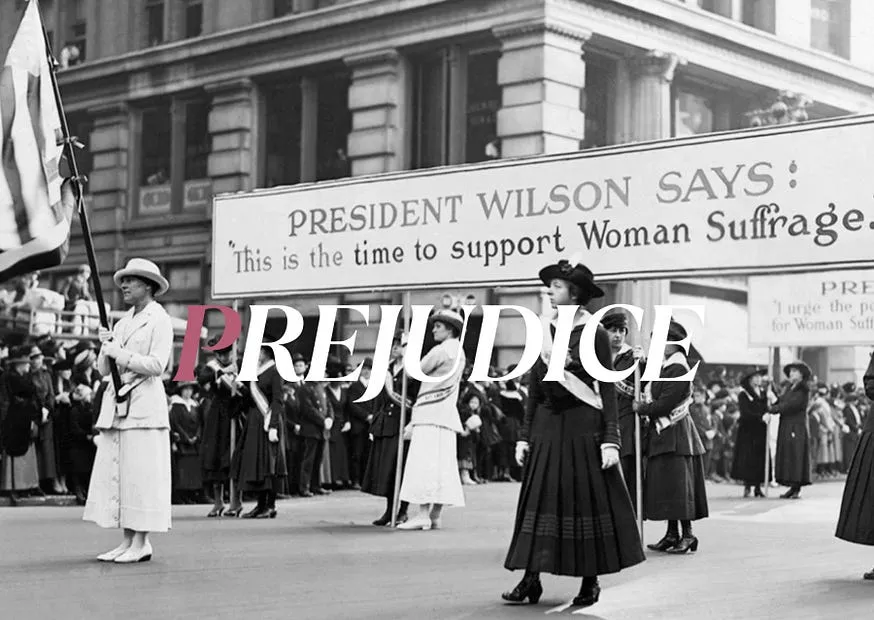
It was only because of prejudice that, in the 19th century, a change was noticed in the rights of women to education. Before that, we were just an image in the enlightened man’s vision. The Great Social Revolution in France and the emergence of the first feminist movements, known as suffragettes, led to the first women being admitted to the Sorbonne. One of the beneficiaries of this change was Marie Skłodowska-Curie. She only needed consent to study, and with her skills, she earned two Nobel Prizes. She was the first person in the world to be awarded the title twice. What would have happened if gender equality had existed from the beginning? If prejudices didn’t treat women as only capable of managing the household, and if voting rights had been granted to them earlier? And what if…
We’ll never know.
LIE
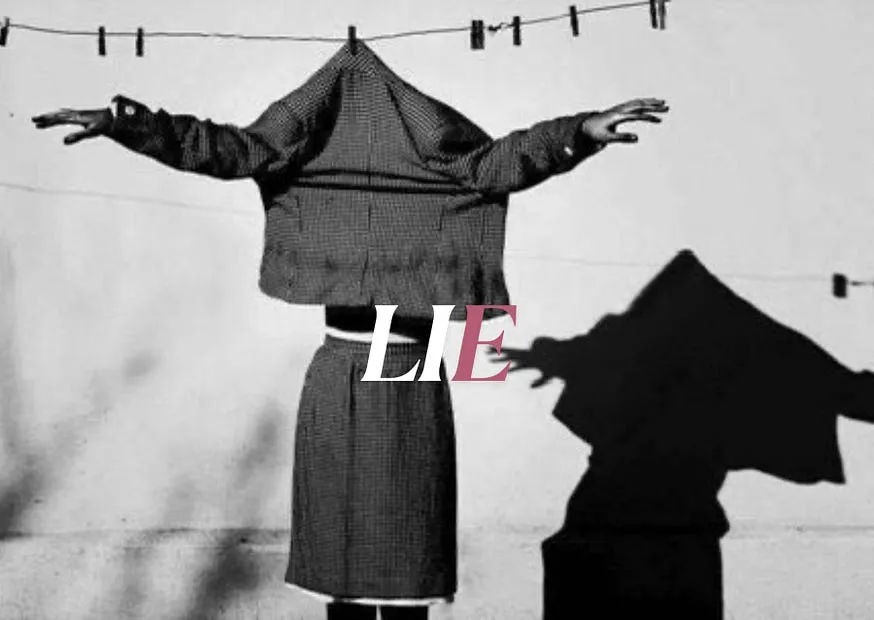
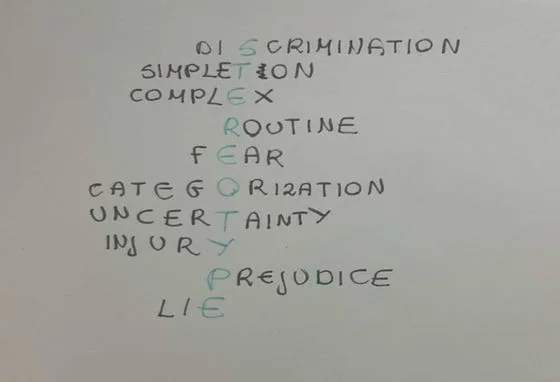
Or maybe I’ll just write that through the lies we pass on from generation to generation, we harm each other. This is the very definition of a stereotype. The unintentional imposition of things we don’t even agree with. It’s a shame that it always takes us years to come to this conclusion. And yet, I am grateful for the changes that are happening. But why did these injustices even exist? We can’t bring back the lives of those who, if born in different times, would have the right to a dignified and deserved life. That’s why a stereotype is discrimination, complexes, and harm. Caused by categorization, generalization, schemas, prejudices, uncertainties, and fear. Let’s not pass on learned truths, but rediscover them – constantly.
First published on Medium